

CommerceIQ promises to help brands improve retail media performance, recover lost revenue, and manage ecommerce operations. But figuring out how much the platform actually costs is surprisingly difficult.
The company doesn’t publish its subscription prices, although third-party software directories report a starting price of $25,000. Without a confirmed billing period or a clear breakdown of what’s included, it’s hard to know whether CommerceIQ is worth the investment.
In this guide, we’ll break down CommerceIQ pricing in 2026, explain what each product includes, cover potential additional costs, and help you decide whether it’s worth paying for.
TL;DR
- CommerceIQ doesn’t publish official pricing. Contact sales for a custom quote based on your requirements.
- Capterra and Software Advice report a starting price of $25,000. However, CommerceIQ hasn’t confirmed this figure or its billing period.
- CommerceIQ offers four main products: Retail Media Management, Digital Shelf Analytics, Ecommerce Sales Management, and Content Optimization.
- Your total cost may depend on several factors, including the products you choose, retailer coverage, catalog size, integrations, and support requirements. CommerceIQ doesn’t disclose its exact pricing formula.
- Additional charges may apply for implementation, onboarding, custom reporting, and professional services. None of these fees are publicly confirmed.
- CommerceIQ offers a 30-day Content Agent pilot for qualified brands, but regular subscription pricing for Content Optimization isn’t publicly available.
- CommerceIQ is best for larger CPG brands that need retail media automation, digital shelf monitoring, and revenue recovery. Brands focused on inventory visibility and supply chain analytics may find better value elsewhere.
Get the better alternative to CommerceIQ for retail analytics. Book a demo with Alloy.ai today.
How much does CommerceIQ cost?
CommerceIQ doesn’t publish its pricing on its website. Instead, businesses need to contact the sales team for a custom quote based on their requirements.
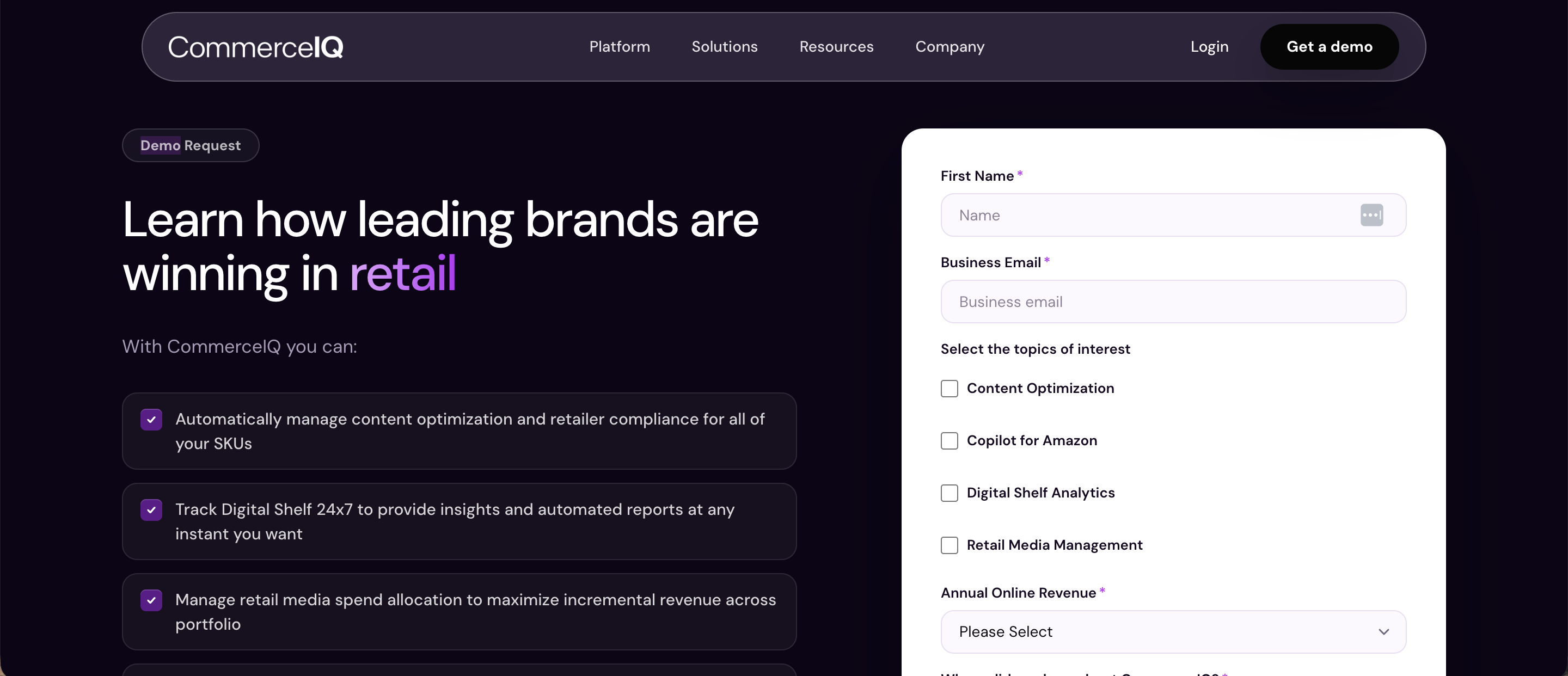
However, a publicly reported starting price exists. Capterra and Software Advice both list CommerceIQ pricing as starting at $25,000, which is one of the many reasons why so many users are researching CommerceIQ competitors.
There’s an important catch, though. Capterra describes this as a monthly price per user, while Software Advice doesn’t specify a billing period. CommerceIQ hasn’t publicly confirmed the figure, so it’s unclear whether $25,000 represents an annual contract, a monthly subscription, or another pricing arrangement.
CommerceIQ offers four main products:
- Retail Media Management
- Digital Shelf Analytics
- Ecommerce Sales Management
- Content Optimization
You can discuss your specific requirements with sales, although CommerceIQ doesn’t publish separate prices for these products.
This makes it difficult to estimate the total investment before speaking with the company. A CPG brand primarily interested in retail media optimization may have different requirements from one that needs sales analytics, digital shelf monitoring, and automated revenue recovery.
Before signing a contract, ask CommerceIQ to clarify exactly what your quote includes, whether implementation and integrations carry additional fees, and how much the price could change if you add more retailers or products.
The reported $25,000 starting price provides a useful reference point, but only a direct quote from CommerceIQ can establish what your business would actually pay. While it is a leading retail ecommerce management platform, finding precise information online really is difficult, so it’s best to do your own research after reading this article.
What is included in CommerceIQ pricing?
CommerceIQ offers four products that cover advertising, digital shelf performance, ecommerce sales, and product content. Together, they form its unified ecommerce management solutions for brands selling through major retailers and marketplaces.
The company doesn’t publish prices for individual products, so you’ll need to check which ones are included in your quote.
1. Retail Media Management
CommerceIQ Retail Media Management helps brands manage advertising across Amazon, Walmart, Instacart, and other major retailers without adjusting every campaign individually.
It uses 50+ signals, including inventory levels, organic search rankings, and advertising performance, to decide when to increase bids, reduce spend, or shift budgets between campaigns.
Here’s what you can do with it:
- Automatically adjust keyword bids and campaign budgets based on performance.
- Manage campaigns across multiple retailers from one dashboard.
- Factor product availability and organic rankings into advertising decisions.
- Measure incremental return on ad spend (iROAS) to see which campaigns generate additional sales.
- Get campaign reports and support from CommerceIQ’s retail media specialists.
CommerceIQ aims to increase retail media ROI by directing advertising budgets toward products with the greatest potential for incremental sales.
If your brand spends heavily on advertising across some of the world’s largest marketplaces, this will likely be one of the more important parts of your CommerceIQ subscription.
2. Digital Shelf Analytics
CommerceIQ Digital Shelf Analytics shows you how your products perform across online retailers, including where they appear in search results, whether they’re available to buy, and how their prices compare with competitors.
CommerceIQ covers more than 1,500 retailers, giving brands access to product performance data across a global network of ecommerce platforms.
When brands sell online, they can use it to:
- Track product availability, prices, search rankings, and Buy Box ownership.
- Monitor organic share of search, seller rank, and competitor visibility.
- Find missing product listings, distribution gaps, and content errors.
- Build performance scorecards using more than 80 metrics.
- Compare results across brands, categories, retailers, and markets.
For CPG brands with hundreds or thousands of SKUs, this means fewer blind spots when monitoring product performance across different retail partners.
You can spot problems such as falling search rankings or unavailable products before they turn into lost sales.
3. Ecommerce Sales Management
CommerceIQ’s Ecommerce Sales Management helps brands understand why sales are increasing or declining and what they can do about it.
It brings together ecommerce sales figures, inventory information, and supply chain data so teams can investigate problems without jumping between multiple retailer reports.
With Ecommerce Sales Management, you can:
- Compare actual sales against forecasts and targets.
- Find inventory shortages and lost Buy Box opportunities.
- Identify products that aren’t selling as expected.
- Get reports and recommendations to help sales teams prioritize problems.
- Track operational issues that affect margins and retailer performance.
CommerceIQ also offers profit recovery automation to help brands identify and dispute chargebacks, invoice discrepancies, and other retailer deductions.
These issues can create substantial revenue leakage, particularly for large CPG brands that process thousands of orders through major retailers.
One thing to clarify with CommerceIQ is whether revenue recovery comes with Ecommerce Sales Management or requires a separate purchase. The company doesn’t publish enough pricing information to confirm this.
4. Content Optimization
CommerceIQ Content Optimization helps brands keep their product listings accurate and improve how easily shoppers can find them.
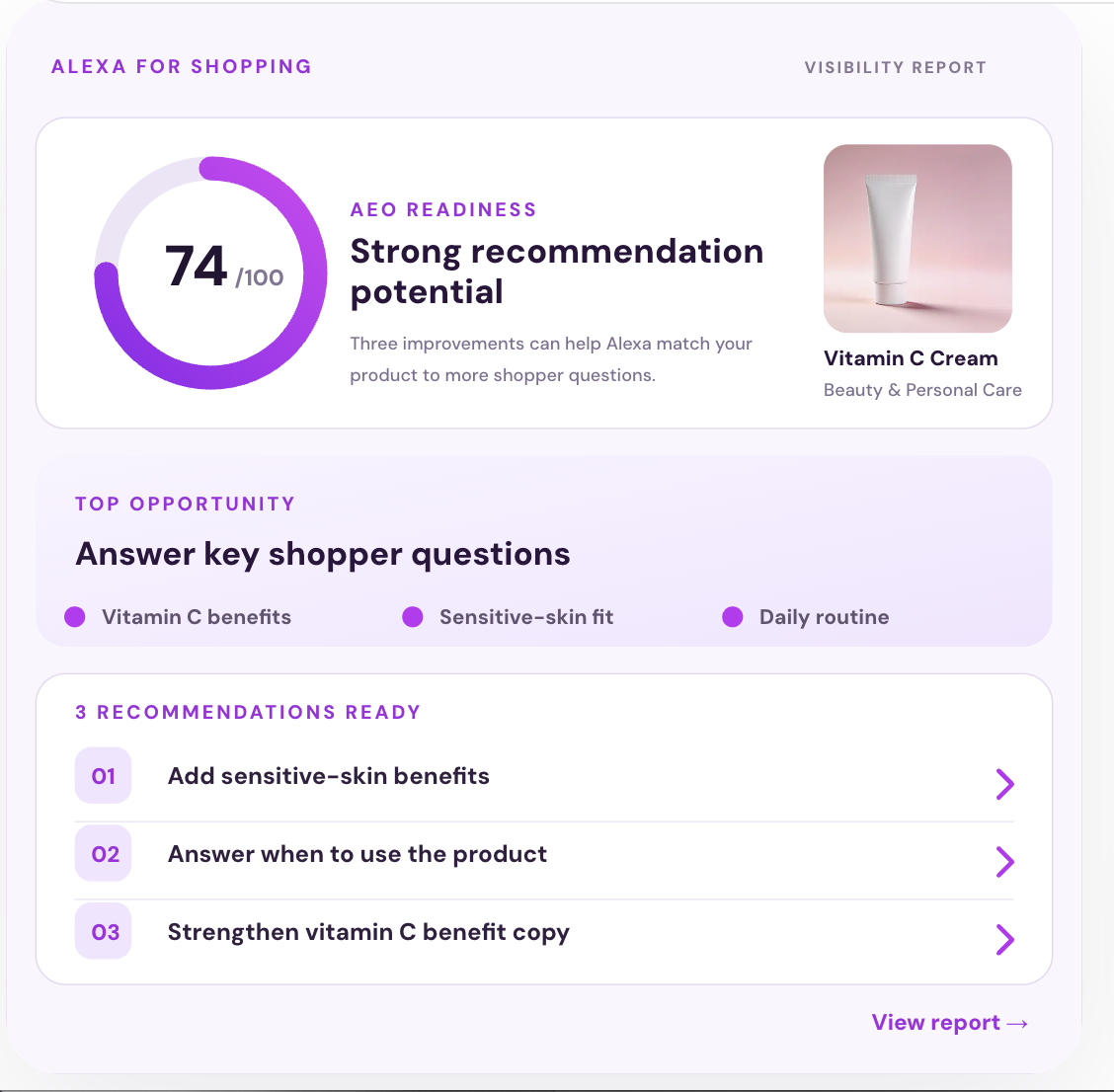
Its Content Agent checks product pages for missing information, outdated descriptions, and other problems that could hurt search visibility or conversions. It can also help brands prepare product content for shopping assistants such as Amazon Rufus.
You can use Content Agent to:
- Check product titles, descriptions, images, and attributes for missing or inaccurate information.
- Identify keyword opportunities to improve organic search visibility.
- Compare product content against retailer requirements and brand guidelines.
- Connect product information management (PIM) systems to keep listings consistent.
- Generate content recommendations and publish approved updates.
This can be useful when your brand sells hundreds or thousands of products across multiple retailers. Rather than checking every listing individually, your team can focus on the pages that need attention.
CommerceIQ advertises a 30-day Content Agent pilot for qualified brands, but there’s no published subscription price. You’ll need to ask whether Content Optimization comes with your contract or costs extra.
What factors affect CommerceIQ pricing?
CommerceIQ doesn’t explain exactly how it calculates subscription prices. However, several factors could affect the quote you receive, depending on how your company plans to use the platform.
Here are the main things to discuss with the sales team:
- Products and features: CommerceIQ offers separate products for retail media management, digital shelf analytics, ecommerce sales management, and content optimization. The number of products you purchase could affect your total subscription cost.
- Retailer coverage: A brand selling exclusively through Amazon may have different requirements from one managing products across Walmart, Target, Instacart, and other retailers. More retail connections could mean a more expensive contract.
- Product catalog size: The number of SKUs you need to monitor may influence pricing, particularly if you’re tracking inventory, pricing, and product availability across several marketplaces.
- Integrations and reporting: Connecting CommerceIQ with your existing business systems and building custom reports could affect the implementation scope. Companies that need detailed insights to support business decisions should clarify what’s included.
- Support and services: Some customers may need additional training, account management, or consulting services. The level of support your employees need could also influence the final quote.
The biggest question is how much value your business will get from the features you’re paying for. A large CPG company managing thousands of products and substantial advertising budgets will have different needs from a smaller brand with a few retail accounts.
Before signing anything, ask CommerceIQ for an itemized quote and confirm which features, integrations, and services are included. This will help you understand what you’re paying for and whether the platform can meet your customers’ needs without unnecessary expenses.
Additional CommerceIQ costs to consider
CommerceIQ doesn’t publish separate fees for implementation, integrations, or professional services. Depending on your agreement, these may be included in the subscription or billed separately.
Before committing to a contract, discuss a few potential expenses with the sales team.
Implementation and onboarding are the first things to clarify. Setting up retailer connections, configuring dashboards, and training employees can take considerable effort, especially if your organization plans to use several CommerceIQ products. Ask whether your quote includes onboarding and how much support you’ll receive during setup.
Integrations and custom reporting are another consideration. CommerceIQ may need to connect with your existing analytics tools, ERP systems, or other technology. If your business requires custom data feeds or reports that aren’t available by default, find out whether you’ll need to pay extra for them.
Professional services and account management can also affect the total investment. CommerceIQ offers expert support for retail media and ecommerce operations, but it’s worth checking what assistance your subscription includes. Ask whether you’ll have a dedicated account manager, regular performance reviews, and help tracking progress toward your goals.
None of these additional fees are publicly confirmed, so don’t assume they’ll apply to your contract.
The best approach is to request an itemized quote that separates software costs from setup, integrations, and ongoing services. That way, you can compare CommerceIQ with other platforms based on the total amount you’ll pay, not just the subscription price.
Is CommerceIQ worth it?
CommerceIQ can be worth the investment, but mainly for large CPG brands that spend heavily on retail advertising and sell through multiple major retailers.
Its biggest advantage is connecting retail media, sales, and inventory data. Instead of optimizing campaigns based only on clicks and conversions, CommerceIQ can adjust spending based on product availability, organic rankings, and actual sales performance. Its automated revenue recovery tools can also help brands reclaim money lost to retailer deductions and chargebacks.
For a company managing millions of dollars in retail sales, even relatively small improvements in advertising efficiency or recovered revenue could justify the subscription cost.
However, CommerceIQ is a harder sell for smaller brands or businesses that primarily need retail analytics.
One concern is the lack of transparent pricing. With a reported starting price of $25,000 and no confirmed billing period, it’s difficult to judge affordability without requesting a quote.
Customer feedback also raises questions about the platform’s usability. Some G2 reviews mention inaccurate reporting, slow performance, software bugs, and a steep learning curve. While other customers praise its automation and support, these complaints are worth investigating before committing to an expensive contract.
You also have to ask how much of CommerceIQ you’ll actually use. If your main challenges involve tracking retail inventory, understanding consumer demand, or identifying supply chain problems, paying for extensive retail media capabilities might not make financial sense.
Our verdict: CommerceIQ is worth considering if retail media automation, digital shelf monitoring, and revenue recovery are major priorities for your business. But if you’re primarily interested in understanding retail sales performance, improving demand forecasts, and preventing stockouts, a dedicated retail analytics platform may provide better value.
CommerceIQ alternatives and their pricing
CommerceIQ isn’t the only retail analytics platform that uses custom pricing. Most competitors also require a sales consultation, although their pricing models and included services can vary.
Here’s how four CommerceIQ alternatives compare.
| Pricing model | Best for | |
|---|---|---|
| Alloy.ai | Custom subscription based on business requirements | CPG brands managing retail sales, inventory, and supply chain data |
| Stackline | Custom pricing for individual products, including Atlas and Beacon | Brands focused on competitive intelligence and shopper analytics |
| Profitero | Custom quotes for analytics products and optional services | Enterprise brands managing digital shelf performance and product content |
| PacVue | Negotiated pricing based on selected advertising and commerce solutions | Brands and agencies managing large retail advertising budgets |
Alloy.ai connects sales, inventory, and supply chain data from 450+ sources. Its retail analytics platform helps CPG brands improve demand forecasts, track inventory, and understand product performance across retailers.
Stackline offers several products for competitive intelligence, shopper research, and retail media analytics. Pricing depends on which products and data coverage you need.
Profitero focuses on digital shelf analytics, product content, and competitive intelligence. It also offers advisory and managed services that buyers can discuss during the sales process.
PacVue specializes in retail media management, with tools for campaign automation, advertising analytics, and budget optimization.
Since none of these platforms publish standard rates, request quotes based on comparable requirements to understand which offers the best value.
Get the better CommerceIQ alternative for retail analytics
CommerceIQ offers extensive retail media and ecommerce management features, but paying for advertising automation makes little sense if your biggest challenges involve inventory, demand forecasting, and supply chain visibility.
Alloy.ai focuses on these challenges, connecting retail sales, inventory, and supply chain data from more than 450 sources in one platform.
With Alloy.ai, you can track sales down to individual stores and SKUs, spot inventory shortages before they cause lost sales, and improve demand forecasts with real retail data. Your team gets a clearer picture of product performance across retailers, distributors, and warehouses without jumping between different reporting tools.
Book a demo today to improve inventory decisions, prevent stockouts, and get more from your retail data.
CommerceIQ pricing FAQs
Does CommerceIQ charge based on advertising spend?
CommerceIQ doesn’t publicly disclose whether its Retail Media Management pricing depends on advertising spend. You’ll need to confirm the pricing structure with its sales team.
Can you purchase individual CommerceIQ products?
CommerceIQ offers separate products for retail media management, digital shelf analytics, ecommerce sales management, and content optimization. However, it doesn’t publicly confirm whether you can purchase each product independently.
Does CommerceIQ offer monthly or annual contracts?
CommerceIQ doesn’t publicly specify its standard contract lengths or billing frequency. Ask the sales team about monthly and annual options, minimum commitments, and renewal terms.
Does CommerceIQ offer a free trial?
CommerceIQ advertises a 30-day Content Agent pilot for qualified brands. A free trial covering the entire CommerceIQ platform isn’t publicly confirmed.
Does CommerceIQ charge extra for additional retailers?
CommerceIQ doesn’t publish fees for connecting additional retailers or marketplaces. Confirm whether your quote includes all the retail connections you need and what happens if you expand later.
Are there any hidden fees with CommerceIQ?
No publicly confirmed hidden fees, but CommerceIQ doesn’t disclose separate rates for onboarding, integrations, custom reporting, or professional services. Request a detailed quote to understand the full cost before signing a contract.