

Stackline gives CPG brands a lot of data, but that does not mean it is the right platform for every retail team. Depending on what you actually need to improve, from retailer performance and inventory visibility to digital shelf analytics or retail media, another platform may be a better fit.
This guide compares the top Stackline competitors in 2026. It is written for CPG leaders, sales teams, supply chain teams, and ecommerce teams evaluating Stackline against other retail analytics platforms.
TL;DR
| Best for | Main advantage over Stackline | |
|---|---|---|
| Alloy.ai | CPG brands that need retailer data, inventory visibility, forecasting, and replenishment insights | Stronger focus on retailer direct data across physical retail, with store- and SKU-level sales and inventory visibility |
| CommerceIQ | Large brands managing ecommerce and retail media across major marketplaces | Connects digital shelf signals with retail media execution, pricing decisions, and marketplace operations |
| Profitero | Ecommerce and category teams focused on digital shelf performance | Deeper monitoring of search visibility, product content, availability, assortment, pricing, and competitor performance |
| Pacvue | Brands and agencies managing retail media campaigns | Strong retail media management with campaign optimization tied to sales, inventory, pricing, and digital shelf signals |
| NIQ Digital Shelf | Brands that want digital shelf data connected with shopper and sales insights | Combines shelf visibility, availability, pricing, and content data with NIQ consumer and shopper datasets |
| DataWeave | Retailers and brands focused on competitive pricing and assortment intelligence | Strong pricing intelligence, product matching, assortment analysis, and flexible data access |
| Syndigo | Brands that need product information management and content syndication alongside analytics | Combines digital shelf analytics with product content management and distribution |
Get a better alternative to Stackline for CPG. Book a demo with Alloy.ai today.
Why look for alternatives to Stackline
You can book a demo and see how the software works for your use case, and hopefully get all your questions answered in the process. But there’s something even better: tapping into actual Stackline reviews from real users. We did that for you, and here’s what you should know.
Data accuracy is not the best
If you run a data platform, you’d want your data accuracy to be your biggest selling point; for Stackline, it’s a huge pain point for their customers. Of all the reviews on G2, a whopping 31 mention inaccurate data in some form.
“Sometimes I got different data for the same time period; it would be better if Stackline could improve data accuracy”
Data is not always fresh enough
Retail data loses a lot of its value when you have to wait for it. Plenty of reviews mention data delays, with some customers reporting weekly refreshes or information arriving one to two weeks late, which can make Stackline less useful when teams need to react quickly.
One user explained it like this:
“The weekly data delay for traffic insights. I wish I could see more real-time data.”
There is a significant learning curve
Stackline gives users access to a huge amount of information, but figuring out how to use all of it can take some work. Many users mention the learning curve, with customers saying it can be easy to get lost in the platform or spend too much time setting up segments and figuring out where the data they need actually lives.
One G2 review explained it like this:
“There is so much data that one can easily get lost! There aren’t enough hours in a day to learn everything that is possible.”
Reporting and exports can be frustrating
Finding an insight in Stackline is one thing; turning it into a useful report is another. G2 reviewers mention awkward Excel exports, limited graphing options, and having to click through several screens to reach certain market data, which can make routine reporting more tedious than it needs to be.
This is what the frustration looks like for a real user:
“Looking at market performance is often behind a few layers/screens. Also hard to download reports in Excel of useful data sometimes”
Top competitors to Stackline to consider in 2026 for category analysis, product research & more
If Stackline falls short of your retail data expectations, here are some of the best alternatives in the market in 2026.
1. Alloy.ai
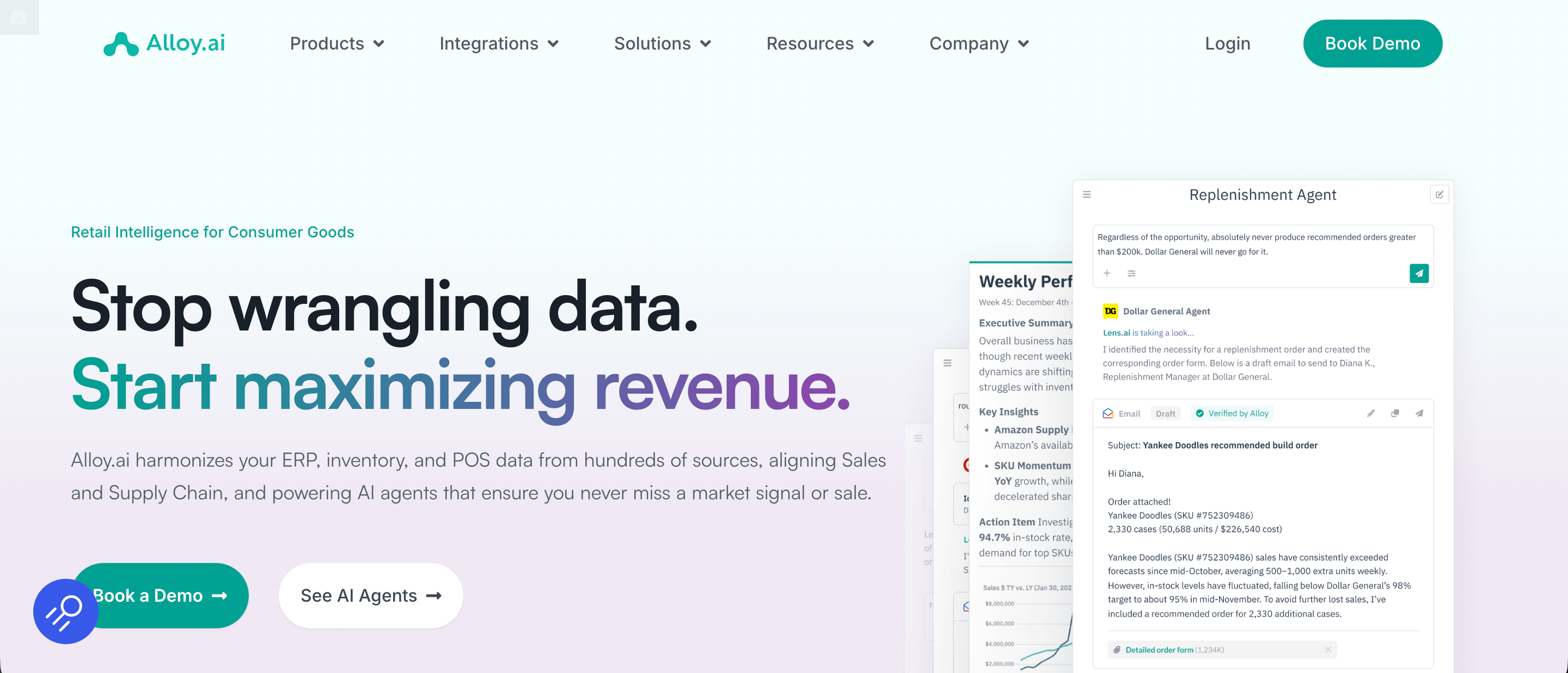
Alloy.ai is a retail analytics and forecasting platform built for consumer brands that need to understand what is happening across retailers at the SKU and store level. It combines retailer point-of-sale and inventory data with internal systems, giving sales and supply chain teams a clearer view of demand, inventory, and retail performance. Alloy also covers marketplaces and owned ecommerce, but its core strength remains retailer-direct data.
Why choose Alloy.ai over Stackline?
- More useful for physical retail: Alloy works with retailer direct data at the store, distribution center, item, and daily level. Stackline is much more centered on Amazon and ecommerce.
- Better inventory visibility: Alloy brings point-of-sale data together with inventory information, helping teams spot stockouts and understand where products need replenishment. Its Replenishment Agent can also identify store-level stockouts and prepare recovery orders for approval.
- Deeper supply chain analytics: Alloy can combine retailer signals with internal ERP feeds, forecasts, and sales targets. This gives teams operational metrics such as weeks of supply, lost sales, and unconstrained demand.
- Retailer direct data is central to the platform: Stackline combines the brand’s own Amazon data with a much larger set of crawled e-commerce data. Alloy is built around measured retailer data, making it better suited to questions such as what sold, where inventory is running low, and what needs replenishment.
Alloy.ai pricing: Alloy.ai does not publish standard plans or list prices, but you can book a demo to get a custom quote.
2. CommerceIQ

CommerceIQ is an ecommerce management platform for large consumer brands that want to connect sales, retail media, digital shelf, pricing, and inventory data in one system. It targets teams managing major retailers such as Amazon and Walmart, using marketplace data and shopper analytics to guide ecommerce decisions and execution.
Why choose CommerceIQ over Stackline?
- More emphasis on retail media execution: CommerceIQ connects shelf conditions with advertising decisions, using signals such as availability, organic rank, keywords, and content quality to adjust bidding and media activity.
- More actionable pricing tools: CommerceIQ supports SKU-level price recommendations, competitor price monitoring, Buy Box optimization, and margin forecasting. This can make it more useful for teams that want pricing strategies tied directly to marketplace performance rather than relying primarily on market research.
- Broad digital shelf monitoring: CommerceIQ tracks digital shelf performance across more than 1,450 retailers, covering search rank, availability, content compliance, and Buy Box performance.
- Stronger focus on taking action from data: CommerceIQ positions its platform around connecting sales, media, and shelf signals with automated actions such as bid changes, content updates, and promotion adjustments. Both CommerceIQ and Stackline are primarily ecommerce platforms, but CommerceIQ currently emphasizes execution across these functions.
CommerceIQ pricing: CommerceIQ does not publish standard pricing plans on its website. You need to contact its sales team and request a demo to receive a quote, which suggests pricing is tailored to the products and retail operations included in the deployment.
3. Profitero
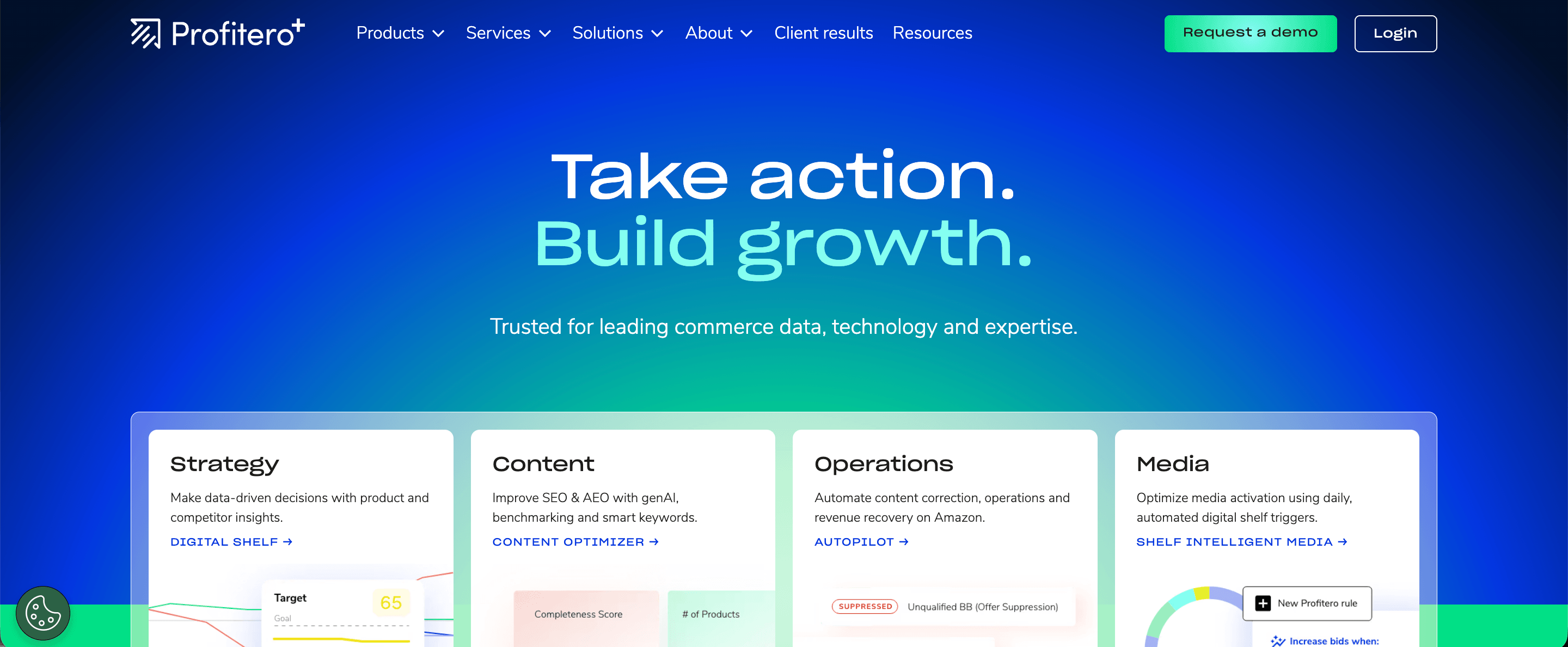
Profitero is a digital shelf analytics platform for brands that want to track product visibility, pricing, availability, content, and competitor activity across online retailers. It is best suited to ecommerce and category teams that need market intelligence and category analysis across a large group of retail partners, with coverage spanning more than 1,400 retailers.
Why choose Profitero over Stackline?
- Deeper digital shelf analytics: Profitero tracks more than 80 million products daily, covering areas such as search position, product content, availability, pricing, assortment, ratings, and reviews.
- Strong category analysis: Teams can compare products and competitors across entire categories, identify assortment gaps, monitor new launches, and see where competitors may be gaining visibility.
- Detailed Amazon sales and share data: Profitero provides daily Amazon sales estimates, category share, first-party versus third-party sales, and ASIN-level insights. This can help brands connect digital shelf changes with sales performance and market share.
- Useful data for retailer conversations: Pricing, availability, assortment, and category trends can be turned into reports for retail partners, giving account and category teams evidence they can use when discussing distribution or pricing decisions.
Profitero pricing: Profitero does not publish standard plans or prices on its website. Pricing is quote-based, so you will need to request a demo and speak with its sales team about the retailers, markets, data coverage, and products you want included.
4. Pacvue
Pacvue is a commerce media platform built for brands and agencies managing retail media, ecommerce operations, and marketplace performance across more than 100 retailers. It combines advertising, sales, inventory, digital shelf, and competitive data, giving teams a way to connect shopper behavior with campaign and commerce decisions from one platform.
Why choose Pacvue over Stackline?
- Stronger retail media management: Pacvue lets teams plan and manage campaigns across Amazon, Walmart, Target, Instacart, and other retail media networks from one system. Teams can fine-tune bids, budgets, and campaign strategy using commerce signals such as inventory, pricing, and product availability.
- Detailed competitive research: Pacvue Market Insights tracks market share, competitor pricing, promotions, sales velocity, keyword demand, and product performance. This makes it useful for product research, identifying top competitors, and understanding how individual products compare with category leaders.
- More direct connection between insights and advertising: Teams can use changes in search demand, pricing, market share, and product visibility to adjust media investment within Pacvue. Stackline offers strong market intelligence, while Pacvue puts more emphasis on turning those signals into campaign actions.
- Useful category and demand modeling: Pacvue uses product, keyword, pricing, and historical performance data to estimate category sales and market share. Brands can monitor whether a category is growing, assess market size signals, and find growth opportunities before deciding where to put additional budget.
Pacvue pricing: Pacvue does not publish standard pricing plans on its website. Pricing is quote-based, so you need to book a demo and speak with its sales team about the retailers, advertising channels, data products, and commerce features you want to use.
5. NIQ Digital Shelf
NIQ Digital Shelf is a digital shelf analytics platform that helps brands monitor product visibility, availability, pricing, content, and search performance across online retailers. It is designed for brands and sellers that want to understand how digital shelf execution affects customers, conversion rates, and overall ecommerce success.
Why choose NIQ Digital Shelf over Stackline?
- Connect digital shelf data with sales performance: NIQ combines digital shelf metrics with sales and shopper data, helping teams see which availability, pricing, and visibility issues are affecting conversion rates.
- More granular store and SKU insights: Brands can monitor availability, pricing, content, and search performance in detail across retail partners. This can be critical for sellers managing large assortments across multiple markets.
- Stronger shopper data: NIQ can connect digital shelf signals with its wider consumer and shopper datasets, giving teams more context around how customers discover and purchase products.
- Prioritize the issues that matter most: NIQ helps teams identify which shelf problems have the biggest commercial impact, making it easier to optimize content, availability, pricing, and visibility through real-time optimization.
NIQ Digital Shelf pricing: NIQ does not publish standard pricing for Digital Shelf. Pricing is quote-based and will depend on factors such as retailer coverage, markets, categories, and the datasets included in your package.
6. DataWeave
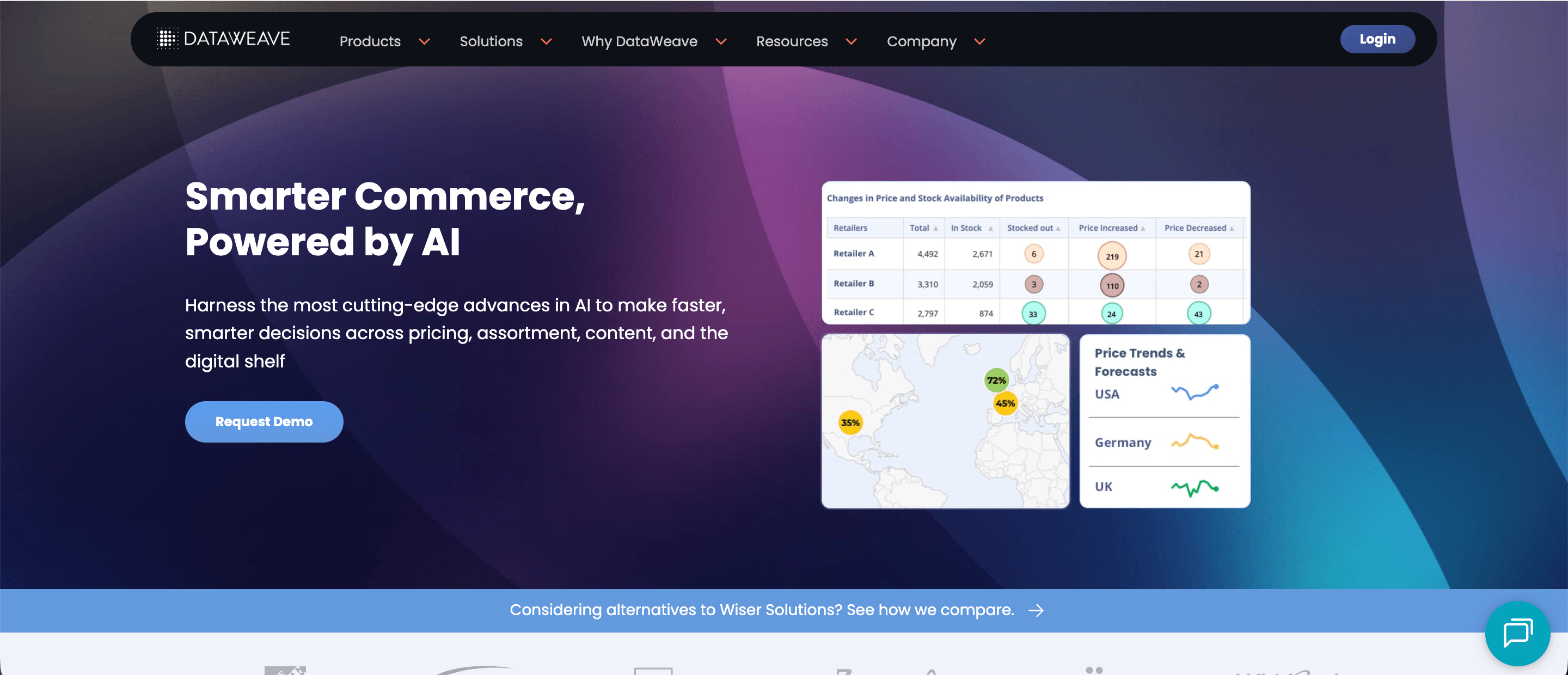
DataWeave is a commerce intelligence platform for retailers and consumer brands that need competitive pricing, assortment, promotion, and digital shelf data. It is a good option for companies that want access to large amounts of ecommerce data without making retail media management the center of the platform.
Why choose DataWeave over Stackline?
- Deeper pricing intelligence: DataWeave tracks competitor prices across locations, channels, currencies, and product variants. Users can compare selling prices, unit prices, promotions, and historical changes to find relevant pricing opportunities and protect profitability.
- Strong product matching: DataWeave can match identical and similar products across retailers, which is useful when competing products do not share the same UPC or other standard identifiers. Companies can also review product matches and check data quality within the platform.
- Better assortment analysis: Retail teams can compare their catalogs with competitors, identify assortment gaps, and monitor product availability across online and physical stores. This gives category managers a clearer idea of where new products or pricing changes could make money.
- Flexible data access: DataWeave offers dashboards, reports, and API access, making it easier to feed competitive data into other business systems and internal resources. This is worth consideration for teams that want data from specialist providers without depending entirely on a closed analytics interface.
DataWeave pricing: DataWeave does not publish standard pricing plans. It sells services through custom quotes, so pricing depends on factors such as the number of products, competitors, markets, data frequency, and included capabilities.
7. Syndigo
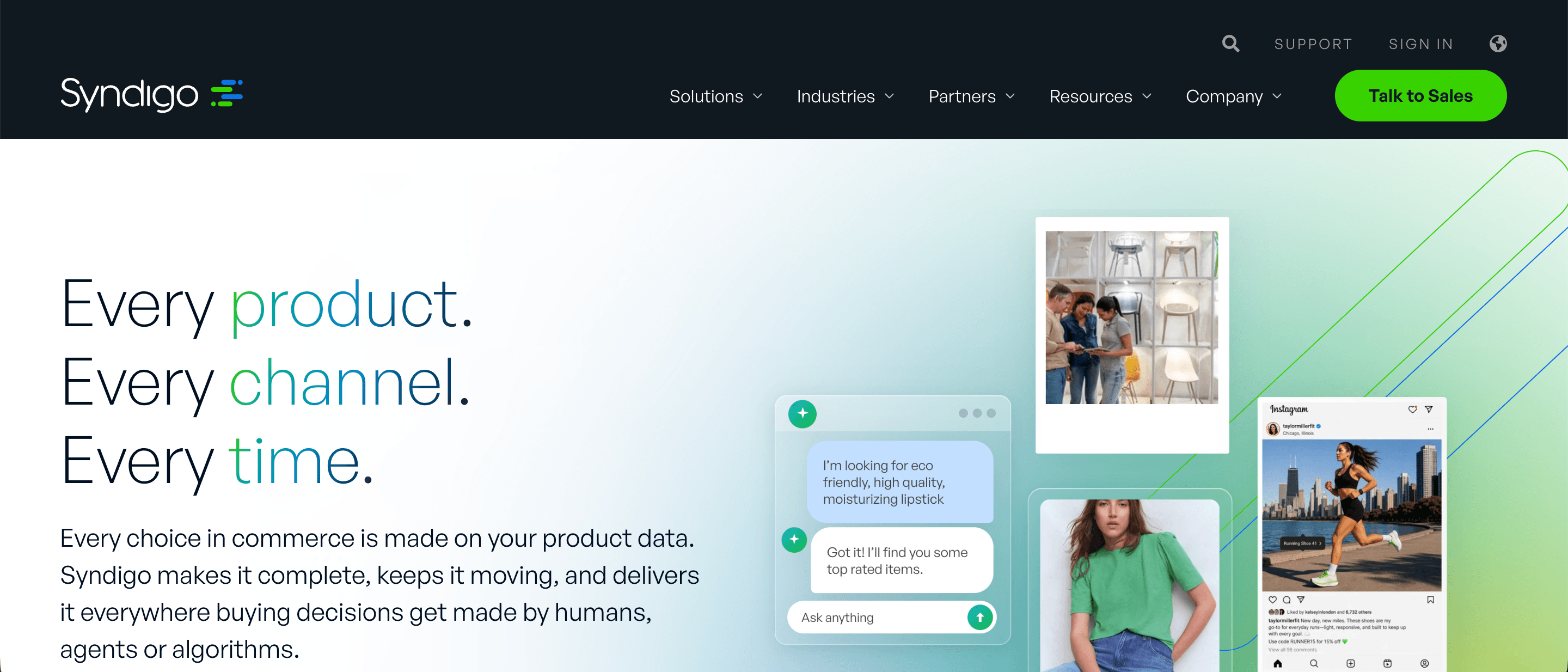
Syndigo is a product experience and commerce data platform that combines product information management, content syndication, and digital shelf analytics. It targets brands and retailers that need to distribute accurate product information at scale, with a network covering more than 3,500 retailers and more than 18,000 companies using Syndigo products.
Why choose Syndigo over Stackline?
- Stronger product content distribution: Syndigo combines analytics with a large syndication network, allowing brands to create and distribute product data according to retailer requirements. This can be more relevant than Stackline for a business where content distribution is as important as measuring performance.
- Detailed content analytics: Users can monitor product content accuracy, availability, pricing, ratings, reviews, and other digital shelf signals. Syndigo also provides daily data refreshes across more than 200 global ecommerce sites through its Digital Shelf Analytics product.
- Connect content with shopper performance: Syndigo helps teams see how product content affects search visibility and conversion performance. This is useful for brands trying to understand whether traffic problems come from weak listings, missing information, or other digital shelf issues.
- More resources for product data management: Syndigo extends beyond analytics into product information management, master data management, syndication, and managed services. That broader set of capabilities may be more useful for companies that want one provider to handle both product data operations and digital shelf measurement.
Syndigo pricing: Syndigo does not publish fixed prices for its wider platform. Its Analytics offering uses a pay-as-you-go model, while larger deployments require contacting the company for pricing based on the products, retailer coverage, and services you need.
Get the best Stackline alternative for CPG
Stackline is a useful option for ecommerce analytics, digital shelf tracking, and retail media. But if your priority is understanding what is actually happening across physical retail, Alloy.ai gives sales and supply chain teams a much clearer view of retailer performance.
Alloy brings retailer point-of-sale data, inventory, internal ERP data, forecasts, and sales targets into one place. That gives you store- and SKU-level visibility into what sold, where inventory is running low, and where replenishment is needed, instead of relying mainly on ecommerce and marketplace signals.
For CPG brands managing large retail networks, that operational focus can make Alloy a more useful alternative to Stackline.
Book a demo with Alloy.ai to see how your retail data could look in one platform.