
- Ben Merva
Your DC has eleven weeks of cover. Your retailer is out of stock in 300 stores. Both are true on the same Tuesday, and both cost you money.
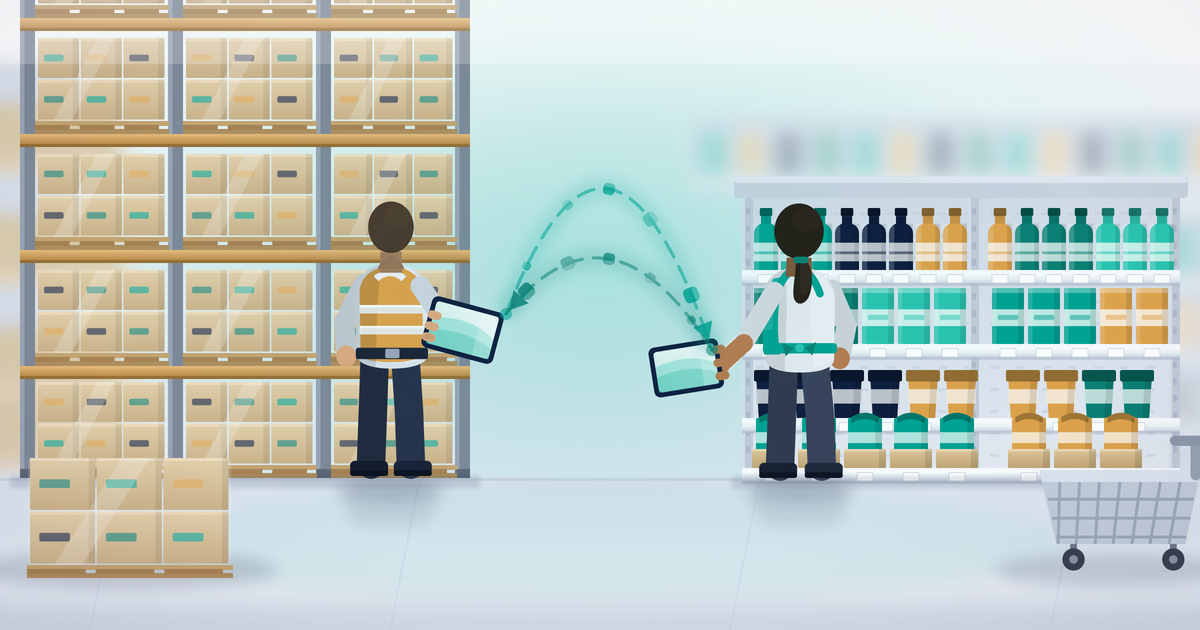
Inventory collaboration closes that gap. You and your retail partners plan from one demand-and-inventory picture, not two versions of the truth stitched together from portal exports and Thursday emails. The money at stake is not small: IHL Group puts global inventory distortion—the combined cost of out-of-stocks and overstocks—at $1.73 trillion a year, with supply chain disruptions responsible for $301 billion. IHL president Greg Buzek expects the next decade to bring “technology advancements that rival 30 years of previous innovation” in supply chain operations.
Here’s what most articles miss. Supply chain collaboration gets written about as an upstream problem: a manufacturer, its suppliers, direct materials, production schedules. But for a consumer brand, the expensive gap sits downstream, between you and the retailers who sell your product. So that’s where we’ll spend our time—the models, the key benefits, why supply chain collaboration falls apart, and how to start. Our guide to building strong partnerships with retailers covers the relationship side.
Table of Contents
What is inventory collaboration?
Inventory collaboration is the practice of trading partners sharing inventory levels, demand signals, and forecasts so they can plan and replenish from the same live picture rather than guessing. Also called collaborative inventory management, it replaces one-directional purchase orders with shared responsibility for keeping the right stock in the right place.
It runs two ways. Upstream, supplier collaboration means sharing demand forecasts with contract manufacturers and component suppliers so production plans, lead times, and quality control line up across the entire value chain. Downstream, a brand shares POS and sell-through data with retail and logistics partners so replenishment matches what shoppers bought.
Downstream is where brands find money. Your supply chain team knows your own inventory levels, but nobody can see what sits in each retailer’s DC and on the shelf—the data that makes retail analytics useful rather than decorative. Most supply chain collaboration projects chase upstream supply chain efficiency instead, because it’s easier to measure.
Inventory collaboration vs VMI vs CPFR
Three models get used interchangeably. Vendor-managed inventory emerged in US grocery and mass retail in the mid-1980s, when suppliers began managing replenishment on customers’ behalf. CPFR came later, formalized by VICS in 1998 after a retailer-manufacturer pilot beat what either side forecast alone.
| Model | Who manages replenishment | Data shared | Best for |
|---|---|---|---|
| VMI | Supplier replenishes buyer stock | POS and stock levels | Steady demand |
| CMI | Supplier proposes, buyer approves | Shared inventory data | Buyers wanting control |
| CPFR | Both forecast and replenish jointly | POS, demand forecasts, promo plans | Promotions, volatile demand |
How inventory collaboration works, from real-time data to replenishment
Inventory collaboration connects supply chain partners to shared data, then agrees on how to act on it. Partners exchange POS, on-hand stock, in-transit volumes, and demand forecasts. They set min and max levels or a joint forecast, replenish against them, and resolve exceptions together rather than trading purchase orders.
Connect and normalize. Every partner sends data in a different format, on a different calendar, with different product IDs. Someone has to harmonize it, and this is where most supply chain collaboration programs stall.
Establish inventory visibility. Both sides see stock, sell-through, and in-transit volumes as they change, not a snapshot from nine days ago.
Agree the model. VMI, CMI, or CPFR, plus targets and replenishment strategies.
Replenish. A supplier gets a license to ship against min/max, or both act on a joint forecast.
Manage by exception. Chase out-of-stocks, phantom inventory, and low weeks of supply. Ignore the SKUs behaving themselves.
Upstream supplier collaboration uses the same mechanics, with production schedules and lead times replacing shelf data. For a brand, step one means ingesting each retailer’s feed, plus transit data from logistics partners, then comparing sell-in against sell-through across the supply chain. Our retail and ecommerce integrations exist because building those pipes is a full-time job. Supplier collaboration upstream and supply chain management downstream are the two halves of a resilient supply chain, and most brands run only one well.
Book a Demo
See Alloy.ai
Synchronize execution to eliminate waste, mitigate risk, and capture every revenue opportunity.
Once you submit a demo request form:
- A sales rep will email you within 24 hours to schedule a brief intro call.
- Our team will provide an overview of Alloy.ai and learn more about your data goals and objectives.
- We’ll create and walk you through a live demo, customized to your specific data needs.
Schedule a Demo
Key benefits of inventory collaboration
The key benefits of inventory collaboration are lower inventory costs and carrying costs, fewer stockouts, sharper forecasts, and a buyer who takes your call. Because both sides work from real-time data rather than guesswork, supply chain collaboration lets them right-size stock together instead of each holding cover against the other’s uncertainty.
Better inventory turnover and cost reduction
See actual sell-through by store, and you stop shipping into locations that don’t need product. Inventory turnover improves because stock lands where demand is, not where last quarter’s allocation spreadsheet said it should. That’s supply chain efficiency you can see on the balance sheet.
Cost reduction here isn’t a rounding error: carrying costs you don’t pay fund the next launch instead of a warehouse of excess inventory. Watch the inventory turnover ratio next to weeks of supply, though: turns look wonderful right until you stock out.
Fewer out-of-stocks, and less excess inventory
Most brands treat these as separate problems owned by separate teams. They’re one problem seen from two ends. The industry group ECR Retail Loss reported in 2025 that availability drives “50% of in-store opportunities,” with one initiative committing CPGs and retailers to a joint 3% cut by 2027.
Sharper demand planning
Shipment history tells you what your retailer ordered. POS tells you what shoppers bought, and demand planning built on the second reacts faster—the case for pushing POS forecasts into planning systems. Gartner expects 70% of large organizations to adopt AI-based forecasting by 2030, and analyst Jan Snoeckx ties its value to “improved strategic decision-making, faster responses to market changes.”
Faster reaction to market shifts
A demand spike in 40 stores is a signal. Caught Monday, it’s an incremental order; caught three weeks later, it’s a post-mortem. Real-time data shortens that gap and dampens the bullwhip effect. Reading market shifts first also lets you mitigate risks early, and shelf space won in March is still yours in September.
Shared performance metrics
Pick your key performance indicators together—in-stock rate, weeks of supply, forecast accuracy, on-time delivery rates—and half the argument disappears. When supplier performance sits in the retailer’s own metrics, reviews stop being negotiations about whose report is right. Operational performance and operational efficiency get measured one way across the supply chain—operational excellence, unglamorous version.
Stronger supplier relationships and better risk management
Openly sharing data is a trust exercise, and it compounds. Stronger supplier relationships give you first call on capacity when supply disruptions hit and make risk management a joint activity rather than blame allocation. Risk management stops being a quarterly slide, revenue optimization talks get easier, and customer satisfaction follows, because it’s mostly a function of the product being there.
Why inventory collaboration breaks down
Supply chain collaboration usually breaks down for structural reasons, not a lack of goodwill. Supply chain partners sit in three silos: teams optimizing for different goals, plans on different time horizons, and systems that don’t connect. All three usually exist at once, and none is fixed by asking people to communicate more.
| Silo | What it looks like | How collaboration fixes it |
|---|---|---|
| Functional | Partners chase different KPIs | Shared metrics, one source of truth |
| Planning horizon | Contract, monthly, weekly plans never sync | A rolling forecast all sides act on |
| Technology | ERP and partner data don't connect | Connectors that normalize partner data |
Two more key challenges show up constantly. Data quality is the first: every retailer names products differently and defines a week however it likes. Trust is the second, and it deserves more attention than it gets. Data access is a commercial decision before a technical one, and no technology solutions repair a relationship where one side expects the numbers to be used against it. Strategic collaboration starts with a conversation, not a connector.
Blind spots run deep across the value chain. McKinsey’s 2025 supply chain risk survey found 58% of companies have mapped their tier-two suppliers, but fewer than half are in regular contact, which makes qualifying alternative suppliers slow. Its conclusion: supply chain performance now depends on “deeper visibility, faster analytics, and smarter automation.”
Where procurement software and inventory management tools stop
Most procurement software serves the buy side: sourcing, contracts, responsible sourcing, direct materials. Your inventory management system covers your four walls. Neither holds a live conversation with 40 retail partners about the shelf, which is how a spreadsheet ends up in the middle of your supply chain.
Book a Demo
See Alloy.ai
Synchronize execution to eliminate waste, mitigate risk, and capture every revenue opportunity.
Once you submit a demo request form:
- A sales rep will email you within 24 hours to schedule a brief intro call.
- Our team will provide an overview of Alloy.ai and learn more about your data goals and objectives.
- We’ll create and walk you through a live demo, customized to your specific data needs.
Schedule a Demo
How to get started with inventory collaboration
Start small and prove it. Pick your highest-value supply chain partners, connect and normalize their data, agree on a model and shared objectives, then run joint replenishment on a narrow slice of the assortment. Most failed programs failed because they tried to onboard everyone at once.
1. Start with your highest-value partners
Focus on two or three accounts carrying the most revenue or risk. Early wins build the internal case and give your buyer a reason to keep taking the call. One analyst on two accounts beats five spread thin, so be honest about resource allocation.
2. Connect and normalize the data
Ingest each partner’s POS and inventory feeds and harmonize SKUs, units of measure, and calendars. Skip it, and every meeting starts with a debate over whose numbers are right. Manual processes don’t scale: we’ve watched supply chain teams lose two days a week to supplier portal downloads that digital tools handle in minutes. That’s supplier portal admin, not supply chain management.
3. Agree the model and the metrics
Choose VMI, CMI, or CPFR per partner. Write down the key performance indicators both sides manage, and how often you’ll review them. Shared objectives on paper beat good intentions, and give your procurement team something concrete. How you’ll mitigate risks together—capacity, lead times, promotions—belongs in the same document, alongside the supply chain performance targets.
4. Replenish together and proactively manage shortages
Share a rolling forecast, replenish against min/max or a joint plan, work the exception list. Supply chain collaboration earns its keep here: proactively manage shortages before the sales window closes. A stockout caught in week three of a promotion is one you mostly didn’t fix.
5. Speak the partner's language
Bring recommendations in the retailer’s own metrics and product hierarchy. If your buyer has to translate your analysis before acting, they won’t. Then keep going: continuous improvement across the supply chain beats a one-off project.
None of this is exotic. Real-time data sharing, one scoreboard, and a standing meeting beat another planning tool. Supplier relationship management software won’t do it for you. Brands that treat supply chain collaboration as a habit, not a project, build a competitive advantage their peers spot too late.
How Alloy.ai supports collaborative inventory management
Alloy.ai is a retail intelligence platform that connects a brand’s data with its retailers’ and distributors’ networks, then layers agentic AI on top. Brands and supply chain partners manage inventory levels from one live picture instead of trading spreadsheets, while the agents surface problems and revenue opportunities first.
The foundation is data ingestion and normalization: 450+ pre-built connectors covering POS, ecommerce, distributor, and ERP feeds, harmonized to SKU-location-day across 20,000+ stores. Sell-in sits next to sell-through, so shipment plans get checked against real demand. The platform overview shows how the network graph links upstream supply to downstream demand.
The collaborative replenishment dashboard puts brand and retailer on the same out-of-stock, phantom-inventory, and weeks-of-supply picture. The Retail Replenishment AI Agent goes further: it detects demand outpacing supply at SKU-location level, calculates the order quantity, and drafts a data-backed email for your team to approve. Our artificial intelligence capabilities put agents on top of real-time inventory data, not a black box.
Does it pay? One customer drove $4 million in incremental sales from shared phantom-inventory data. A specialty game manufacturer combined sell-through, shipment, and forecasting data to save an estimated $240,000. Crayola, BIC, Valvoline, Bosch, SimpliSafe, and Melissa & Doug all run on Alloy.ai, reporting up to 35% fewer out-of-stocks.
Where this leaves you
A collaborative supply chain turns a one-directional order relationship into a partnership with shared numbers. Done well, supply chain collaboration lifts inventory turnover across the entire supply chain, cuts stockouts and excess inventory at once, and turns retailer trust into a competitive advantage. For consumer brands, the shelf is where you win or lose money.
You don’t need a replatforming project. You need one retailer, clean shared data, and a standing meeting where both sides look at the same screen.
Book a demo, and we’ll show you what that looks like on your accounts.
Frequently Asked Questions
What is inventory collaboration?
Inventory collaboration is the practice of trading partners sharing inventory levels, demand signals, and forecasts so they plan and replenish from one live picture rather than guessing. It replaces one-directional purchase orders with shared responsibility for stock, upstream and downstream.
What is the difference between VMI and CPFR?
VMI puts the supplier in charge of replenishing the buyer’s stock from shared POS data, within agreed min and max levels. CPFR keeps both sides involved, jointly building a forecast and replenishment plan. VMI is simpler; CPFR performs better when promotions and seasonality make demand fluctuations hard to predict.
How do brands and retailers collaborate on inventory?
Brands ingest each retailer’s POS and inventory feeds, compare sell-in against sell-through, and bring replenishment recommendations to the buyer in the retailer’s own metrics. Both sides work one exception list and agree on actions before the order cycle closes. Supply chain collaboration lives or dies on the data underneath.
What data should partners share?
At minimum, POS sell-through, on-hand stock by location, and in-transit volumes, ideally daily. Add demand forecasts, promotion plans, and production schedules where partners are willing. Access is rarely the hard part. Normalization is, and supply chain visibility depends on fixing it first.
Book a Demo
See Alloy.ai
Synchronize execution to eliminate waste, mitigate risk, and capture every revenue opportunity.
Once you submit a demo request form:
- A sales rep will email you within 24 hours to schedule a brief intro call.
- Our team will provide an overview of Alloy.ai and learn more about your data goals and objectives.
- We’ll create and walk you through a live demo, customized to your specific data needs.